
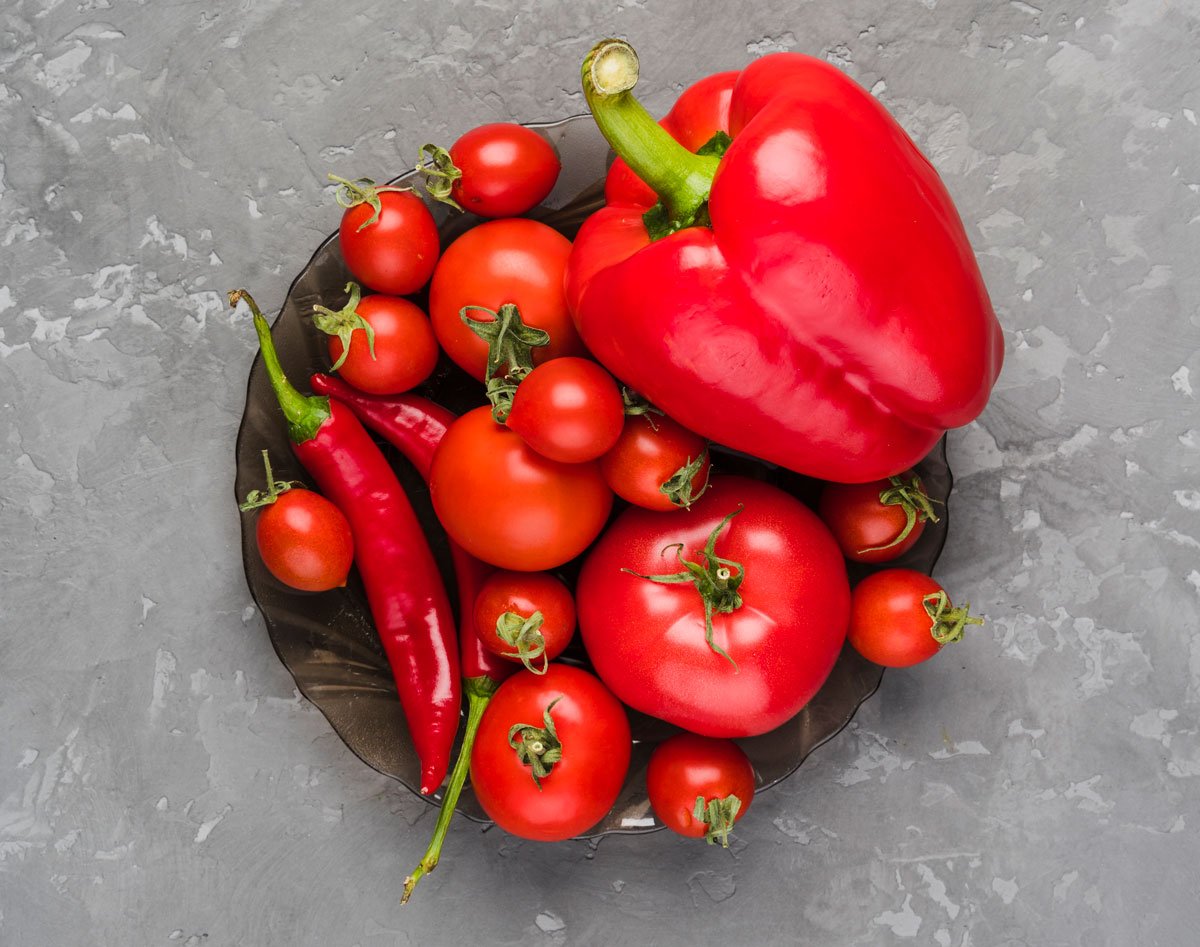

Composition and benefits of red vegetables
The pigments found in vegetables are the ones responsible for providing colour to them. Science has been interested in their presence in the diet, as they can have positive effects on the body. Among red fruits and vegetables, lycopene, anthocyanins, beta-cryptoxanthin and betacyanins are predominantly present.
Specifically, the consumption of red vegetables has been associated with a lower risk of suffering from some types of cancer, such as lung cancer (thanks to carotenes) and prostate cancer. Further progress is still needed, but the first indications suggest a relationship between intake and a reduced probability of developing these pathologies.
On the other hand, carotenoids play a fundamental role in the development of neurological health, as they are present in large quantities in the brain. Thanks to them and to the anti-inflammatory and antioxidant action, their consumption can prevent the appearance of neurodegenerative diseases.
They are also related to better visual capacity and a reinforcement of night vision. In addition, there is a lower probability of developing problems such as age-related macular degeneration.
10 options of red vegetables and their respective benefits:
- Tomatoes
The first thing that surprises when talking about tomatoes is knowing that they are a fruit that is eaten like a vegetable. Originally from South America, today they are famous throughout the world with a great variety of sizes and shapes.
Because of their flavor, they combine very well with other foods and provide significant amounts of vitamin C, potassium and lycopene. It should be noted that the latter is found in high concentrations in tomato paste or ketchup.
- Red pepper
Another of the fruits originating from the American continent that has spread throughout the world are peppers. They are a type of berry with a hollow interior, although edible varieties have been modified to be more fleshy and soft.
There are also green and yellow ones, but it is the red ones that concentrate the greatest amount of beta-carotene. They also stand out in vitamin C, B6, folates and antioxidants.
- Beetroot
The stem of the Beta vulgaris plant has been consumed since prehistoric times. Among its pigments, betaines stand out, which can dye the foods that are cooked with it.
Its high natural sugar content is often used to make sweet recipes such as cakes or syrups. However, it must be kept in mind that the consumption of beet juice can have some adverse effects, since it would increase the concentration of nitrates, capable of stimulating abnormal cell growth.
- Chili or chili
It belongs to the same family as red peppers, but they are smaller and spicier. Although their small size should not confuse, since they are authentic nutritional treasures.
They contain a large amount of vitamin C and A. In addition, one of its characteristic components (capsaicin) has a marked analgesic activity.
- Red onion
There are hundreds of varieties of this vegetable. One of them has the outer layers tinted by anthocyanins. It is the red onion, although this colour is often lost when cooked. Although they can be eaten raw, they are very useful for caramelising or cooking jams and chutneys. - Chicory
It belongs to the Cichorium genus, like endive or escarole. It stands out for its slightly bitter flavour and is often used in some pasta and risotto recipes. It is a good source of vitamin K and minerals, such as copper or manganese. - Red chard
This edible plant stands out for its fleshy leaves and stems. The green ones are better known and common, but some varieties contain betaines and have a red colour. In recent years, its cultivation has been revived. - Watermelon
The quintessential summer fruit, very light, hydrating and a source of minerals, such as manganese and potassium. Whole or crushed, it is an ideal dessert, but it also combines well with savoury ingredients. - Cherries
One of the most appreciated fruits for its natural sweetness, although there is also a variety with a sour taste. Both contain different antioxidants and polyphenols (beta-carotene, anthocyanins and flavonols) with a possible anti-inflammatory activity. - Strawberries
They come from a plant that is very easy to grow, but they can only be enjoyed during the summer. They are harvested when they are ripe and, as they are fragile, they should be consumed within a few days. They are light, with a notable presence of fiber, potassium and magnesium.